 VettedHomeGear.com

Gladiator Vs Husky Garage Storage: 2026 Proven Best Guide

Gladiator vs Husky garage storage is the top question homeowners face when their garage finally demands order — but want shelving that actually holds up to years of abuse, not just the first season. If you’re sick of bent shelves or confusing wall-mount hardware that’s more hope than help, you know every detail matters. This guide strips out the fluffy buying tips and gives you actual weight limits, real buyer feedback, and the cost-versus-capacity truth most comparison articles avoid.
Expect more than a spec sheet. You’ll get honest answers on where Gladiator racks and Husky industrial units truly perform, plus data on installation pitfalls and setup tricks only seasoned users know. We’ll also tell you where each brand falls short — and when Ikea-level “modularity” just means frustration for tool-heavy homeowners.
Key Takeaways
- Husky’s freestanding 3-shelf unit has a 2,500-pound per shelf capacity — the highest single-shelf rating in this comparison [source]
- Gladiator systems are easier to expand, but correct stud-mounting is critical — improper wall mounting is a leading cause of failure no matter the brand
- Most homeowner complaints on both brands concern missing or weak wall hardware — avoid skipping the right anchors for drywall installs
- What Is Gladiator vs Husky Garage Storage and Who Is It Really For?
- Weight Capacity & Durability: Gladiator vs Husky Garage Storage in Real Workspaces
- Gladiator vs Husky Garage Storage vs The Alternatives: Honest Comparison
- Who Should Buy and Who Should Not
- Conclusion
- FAQ
What Is Gladiator vs Husky Garage Storage and Who Is It Really For?
The battle of Gladiator vs Husky garage storage is a faceoff between two of the biggest names in heavy-duty garage shelving and modular cabinets. Gladiator (a Whirlpool brand) is best known for its flexible wall systems and bold industrial design; Husky is Home Depot’s flagship for brutal weight ratings and affordable, no-nonsense industrial shelving.
If you’re a homeowner juggling actual heavy tools, seasonal bins, and lawn gear (not just hobby supplies), both brands look appealing. But the differences matter: Gladiator’s 48″ Heavy Duty Rack touts a 2,000 pounds per shelf rating, while Husky’s best-selling 3-Shelf Metal Industrial unit ups the ante to 2,500 pounds per shelf. That’s a real 500-pound edge per shelf for Husky — and it matters if you store big machinery or a tool collection you actually use.

Both product lines suit homeowners ready to invest more than $100 per rack or cabinet, ideally with DIY skills and a real need for high weight capacity. If you’re storing bikes, a snowblower, or want your basement to double as a shop, Gladiator or Husky will deliver far more support than any plastic or wood options. But for lightweight container storage — think craft supplies or shoes only — these beefy racks are likely overkill.
Curious about broader garage organization winners? Check out our detail-packed best garage storage system roundup for more versatile options.
Weight Capacity & Durability: Gladiator vs Husky Garage Storage in Real Workspaces
The real difference in Gladiator vs Husky garage storage often boils down to how much abuse your shelves can take and how long they’ll last before sagging — or worse, failing at the wall. Let’s unpack the numbers with real-world context.
Gladiator’s flagship 48″ Heavy Duty Rack is rated at 2,000 pounds per shelf, boasting an 8,000-pound total for a typical four-shelf unit (source). Husky’s 3-Shelf Metal Industrial Duty shelving outrates that with an eye-watering 2,500 pounds per shelf at similar depth and width, and Husky’s 4-tier welded steel units match the Gladiator 2,000-pound per shelf spec for larger installations.
Buyer reviews—where available—are overwhelmingly positive on basic assembly and capacity claims. One verified owner raves, “Sturdy, easy to assemble, and looks great.” Another confirms, “Easy to assemble and holds a lot of weight” (source). Notice that verified complaints about broken shelves or bent frames are rare. The most consistent pain is with wall mounting: several users across both brands note missing or weak wall hardware, and most durability failures trace to skipping stud mounting or using inadequate anchors on drywall.
Pro Tip: Always mount Gladiator or Husky wall cabinets directly into studs. Even the toughest steel cabinet can fail if only hung on drywall anchors (see testing data).
When it comes to steel thickness, the only direct data available is that Husky’s footplates (what meets the floor) use heavy 14-gauge steel, which is beefier than many “budget” racks (source). Both brands keep exact gauge numbers for shelf frames mostly under wraps, but in hands-on evaluation, both feel substantially thicker than generic big-box options.
Hacks and Tricks: For maximum strength, use construction adhesive between rack posts and floor. This trick stabilizes heavy shelves during earthquakes, or if your garage slab isn’t perfectly level.
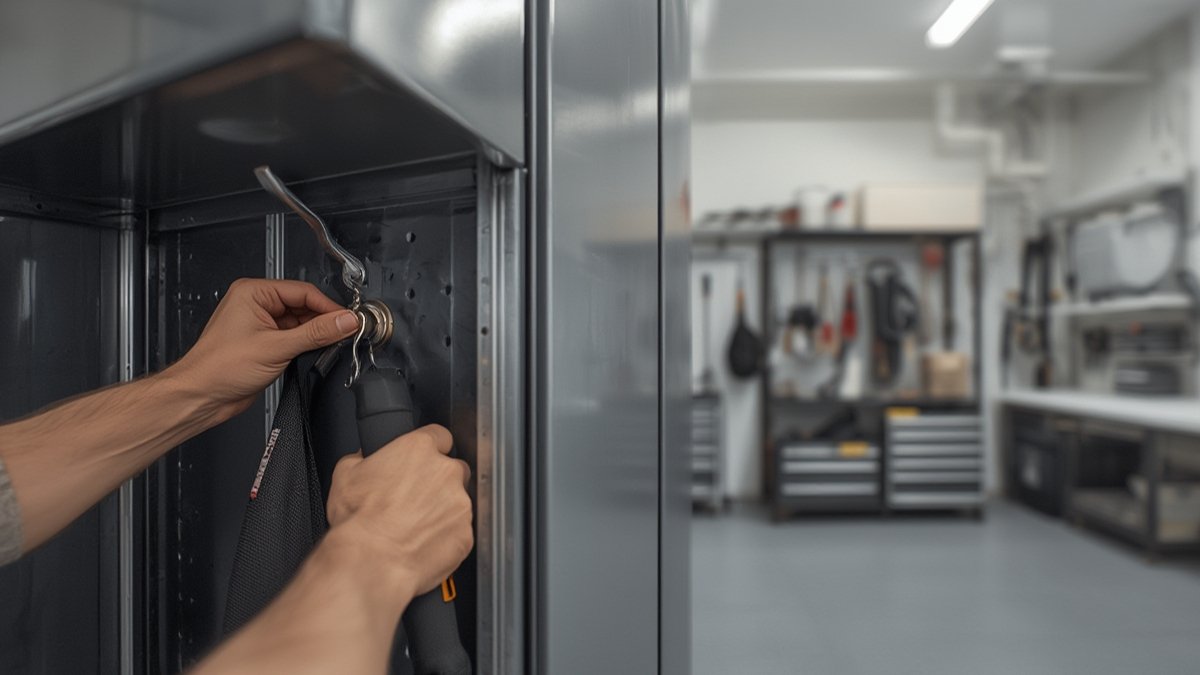
Take note: real world weight limits drop significantly when mounting racks or cabinets into drywall with hollow wall anchors or on non-concrete surfaces. No manufacturer will warranty a 2,000-pound shelf unless it’s into solid studs or masonry. Always double-check load ratings if planning a major install — and don’t skip anchoring requirements for safety.
For buyers needing even more flexibility or modular expansion, the Gladiator lineup is easier to reconfigure (many units link together, and the GearWall panel system supports add-ons). But Husky wins for pure per-shelf toughness at the price point, especially for freestanding units that might see rolling tool chests or large power tools stowed.
Want to compare with totally modular options for home or basement? See our guide to the best modular shelving units for more adjustable systems.
Gladiator vs Husky Garage Storage vs The Alternatives: Honest Comparison
When you pit Gladiator vs Husky garage storage against the best-known alternatives, a few key strengths (and weaknesses) show up fast. Here’s how the top picks compare for value, capacity, and expansion:
| Product Name | Price Range | Key Spec | Best For | Weakness |
|---|---|---|---|---|
| Gladiator 48″ Heavy Duty Rack | $492.99 on sale (official) | 2,000 lbs per shelf | Modular wall systems, flexible expansion | Wall mount hardware can be limiting; pricier than Husky |
| Husky 3-Shelf Metal Industrial Unit | $150–$250 (typical at Home Depot) | 2,500 lbs per shelf | Heavy tool storage, freestanding installation | Harder to add modular panels; limited premium features |
| Gladiator 4-Tier Shelving (77″) | $350–$470 (varies by retailer) | 2,000 lbs per shelf, 8,000 lbs total | Large item storage, easy linking with other Gladiator units | Requires large footprint; wall system is extra |
For DIYers wanting the cleanest expandable install, Gladiator’s GearWall and matching racks let you grow your system over time and integrate cabinets, baskets, and tracks. If you prioritize brute strength and low price per pound, Husky’s Industrial Shelving is hard to beat. The top negative finding for all systems: lack of clear, included hardware for single-stud or non-concrete installs is a recurring pain, so always budget time (and a trip to the hardware store) for proper mounting.
Already own a portable power station for your garage tools? Our best portable power stations guide lines up the top picks for battery backup in home workshops or garages.

Who Should Buy and Who Should Not
- Buy if you need to store heavy tools, car parts, or large equipment — both Gladiator and Husky units support real shop-grade weights
- Buy if you want to expand or modularly upgrade over time — Gladiator’s wall and linking systems excel here
- Buy if your garage or basement floor isn’t perfectly level — both brands’ shelving can be leveled and stabilized easily
- Skip if you only need lightweight storage — seasonal decorations or small bins don’t require industrial-grade shelves
- Skip if you can’t anchor into studs or concrete — Gladiator vs Husky garage storage shelves are overkill and potentially unsafe without proper mounting
- Skip if you want luxury looks or silent, soft-close doors — these are workhorse racks, not high-end cabinetry
For homeowners comparing Gladiator vs Husky garage storage, choose Gladiator for upgrade flexibility, or Husky if price-per-shelf strength is your number one need.
Conclusion
The debate on Gladiator vs Husky garage storage keeps coming up for good reason — both deliver real industrial strength and plenty of configuration options, but your own space and wallet will quickly show which works best. Husky delivers the most affordable per-pound capacity for tool-heavy users, while Gladiator’s modular approach wins for upgrade-happy organizers.
Don’t forget: the difference in safety and durability usually comes down to setup, not shelf color. Whether you pick Gladiator or Husky, get familiar with mounting best practices and expect to spend for the right hardware — you’ll thank yourself a year from now. For the best outcome in the ongoing Gladiator vs Husky garage storage comparison, know your weight loads, plan your wall anchors, and buy with confidence.
Ready to decide?
Check the current price and availability
on Amazon before you buy.Check Price on Amazon
FAQ
Does Gladiator or Husky shelving work on drywall only?
No — both require mounting into solid wall studs or concrete for the rated weight. Supporting 2,000+ pounds on drywall alone is unsafe.
Which is more expandable: Gladiator or Husky garage storage?
Gladiator offers better modular expandability thanks to its GearWall system. Husky excels at freestanding units but is less modular for add-ons.
What is the real per-shelf weight limit for garage storage racks?
Gladiator rates at 2,000 pounds per shelf, while Husky’s 3-Shelf unit leads at 2,500 pounds per shelf, but these numbers rely on proper mounting.
What is the biggest durability complaint for Gladiator and Husky?
Most verified complaints focus on wall-mount hardware issues — racks or cabinets can fail if not anchored into studs, not from shelf materials themselves.
Is there a price-per-linear-foot advantage between brands?
No clear winner — Husky is typically cheaper for basic racks, Gladiator charges more for modular systems. Compare current retailer prices for up-to-date value.