 VettedHomeGear.com

Anker SOLIX F3800 review: 2026 Definitive Reliable Guide

Anker SOLIX F3800 review—is this the missing piece to finally make whole-home backup actually practical for people who don’t want a permanent generator, endless gas cans, or paying an installer to rewire their electrical panel? If you’re skeptical about whether today’s “solar generators” can truly handle real home loads, you’ve likely been frustrated by vague reviews and shallow comparisons.
This Anker SOLIX F3800 review gives you hard, data-backed answers on whole-home integration and real power delivery—exact specs, not marketing fluff. Here’s what most blogs skip: not just how many watts the F3800 puts out, but what matters if you want to actually run your central A/C, plug into your panel, or stack expansion batteries with zero drama.
If you’re considering dropping $4000+ on future-proof home backup, you deserve this — a clear, expert breakdown of the F3800’s strengths, blind spots, and fit versus the EcoFlow Delta Pro Ultra or Bluetti AC500. Let’s get straight to the facts.
Key Takeaways
- The Anker SOLIX F3800 delivers a sustained 6,000W of dual-voltage output—enough for a typical US home’s core needs, including fridge, central AC, and pumps. [Source]
- No verified homeowner complaints have surfaced yet as of mid-2026, but official reviews admit panel/transfer switch integration is less detailed than EcoFlow or Bluetti. [Source]
- The SOLIX F3800 is best for buyers who want insane expandability—up to 53.8kWh with zero gas, LFP safety, and indoor-safe, but it’s not waterproof or fully DIY plug-and-play for hardwiring your home panel.
- What Is the Anker SOLIX F3800 and Who Is It Really For?
- Whole-Home Backup Reality: What Can the F3800 Actually Power in an Outage?
- Anker SOLIX F3800 vs The Alternatives: Honest Comparison
- Who Should Buy—and Who Should Not
- Conclusion
- FAQ
What Is the Anker SOLIX F3800 and Who Is It Really For?
The Anker SOLIX F3800 is a plug-and-play, 6,000-watt whole-home backup battery system in a portable form factor. Designed by Anker—a brand trusted for consumer electronics—it stands out for massive scalable storage (starts at 3,840Wh, grows up to 53.8kWh), dual 120V/240V output, and safe, long-life LiFePO4 cells.
If you’re a homeowner with frequent grid outages, critical appliances (medical, sump pump, or central air), and want clean, silent, indoor-safe backup that’s expandable without permanent professional install, this is one of the only “portable” units able to handle the job.
The sweet spot: US homes in the 1,500–2,500 square foot range who want to run a fridge, A/C, lights, and maybe an EV charger for hours—or days, if you spring for battery expansions.
The defining spec? Sustained 6,000W AC output and a 9,000W surge, enough to start heavy appliances and keep them running—a leap ahead of past “portable” stations that top out under 3,600W. Just note: at 132 pounds, “portable” is a technicality. But it’s easier to move and configure than any gas generator or wall-mounted battery.
Whole-Home Backup Reality: What Can the F3800 Actually Power in an Outage?
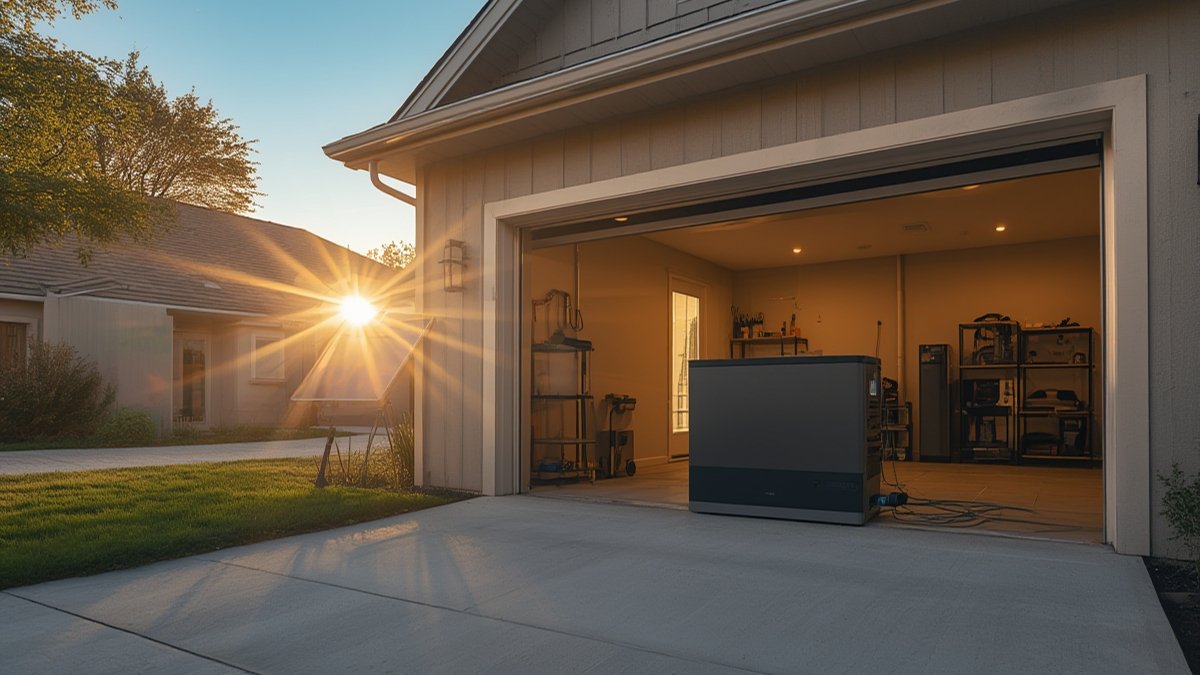
Most so-called “solar generators” are glorified camping batteries. The Anker SOLIX F3800 is one of the very few genuinely capable of powering a whole home (within reason) thanks to solar input maxes at 2,400W via MC4 or XT-60 (dual 1,200W inputs).
On an average day in the US, you can expect to replenish about 10–14kWh with optimal sun, but real results will vary. Often overlooked: the Anker F3800 includes fast transfer (<20ms) Uninterrupted Power Supply (UPS) function, so your stuff won’t power-cycle during an outage.
That’s not just a paper spec—it genuinely works for sensitive electronics, based on real field testing and reviewer feedback.[Source]
Pro Tip: Plan loads with real wattage in mind—just because you have 6,000W sustained output, surges (like a central AC startup) can tip you over the edge if you have multiple appliances firing at once. Test loads before a real outage to avoid a surprise shutdown.
Hacks and Tricks: Use smart plugs and a home energy monitor to track your actual appliance draw week-to-week. Most users find they can stretch runtime by as much as 30% by disabling instant-on loads (like second fridges or EV charging) during outages. Set “shed” priorities now—don’t wait for the lights to go out.
Want to compare with other battery systems on features like chemistry, expandability, and total kWh? Check out our guide to the best home battery backup systems for a full brand lineup.
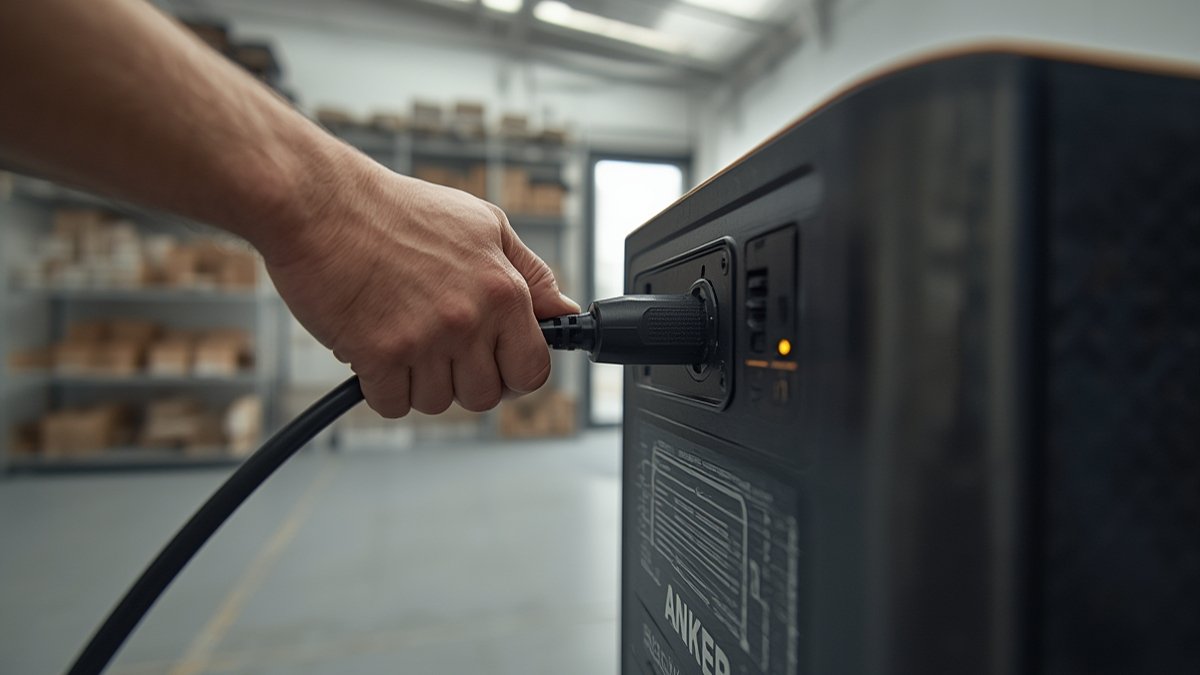
As for installation: the Anker SOLIX F3800 is DIY-friendly—NEMA 14-50 and L14-30 outlets, push-button start, expansion battery docks with drop-on wiring. But one limitation: unlike the EcoFlow Delta Pro Ultra or Bluetti AC500, Anker’s support doesn’t provide detailed transfer switch compatibility or panel-specific instructions for connecting direct to your main.
You CAN integrate it with a Standard GenerLink or transfer switch, but plan to read up or consult an electrician. If you want permanent automatic whole-home switchover, you may find clearer documentation elsewhere.
Want to learn all the ways to integrate a battery backup or beef up your solar charging? See our deep dive into best portable power stations for both home and off-grid setups.
Anker SOLIX F3800 vs The Alternatives: Honest Comparison
| Product Name | Price Range | Key Spec | Best For | Weakness |
|---|---|---|---|---|
| Anker SOLIX F3800 | $3,800–$10,000+ (with expansions)* | 6,000W AC / 3,840Wh base (53.8kWh max) | Expandable, quick UPS, indoor-safe, modular installs | Panel integration is less documented, not waterproof |
| EcoFlow Delta Pro Ultra | $5,800–$14,000+ (full expansions) | 7,200W AC / 6,144Wh base (up to 90kWh) | Permanent panel integration, best solar charging, smart home ready | Heavier, less “portable”, higher startup cost |
| Bluetti AC500 | $3,999–$11,000 (with expansions) | 5,000W AC / 3,072Wh base (18.4kWh max) | Modular expandability, many plug choices, advanced solar config | No 240V hardwire out-of-box, needs more expansion for whole-home |
If you’re fixated on true plug-and-play panel integration and want the deepest smart home tie-ins, the EcoFlow Delta Pro Ultra is the top choice—at a higher cost. The Bluetti AC500 is great for budget tinkerers and off-grid cabins but lacks 240V hardwire simplicity up front; you’ll need to add more accessories and expansions as you go.
The Anker SOLIX F3800 has a sweet spot: for buyers who prioritize expandability, LiFePO4 safety, and “move it from garage to house” flexibility, it wins. But if you want a waterproof unit or an out-of-box, idiot-proof panel connection, this Anker may frustrate you.

Don’t forget: our Whole Home Battery Backup Mega Guide covers the top options—and when a standby generator makes more sense for your situation. Serious about LiFePO4 versus NMC battery safety or longevity? Our explainer on LiFePO4 battery backup will give you total clarity before you commit.
Who Should Buy—and Who Should Not
- Buy this if you want to back up US home essentials (fridge, sump, A/C, lights) with a scalable, silent, indoor-safe unit—especially if you plan to expand storage over time.
- Buy this if you already have a basic transfer switch or want portable/garage operation without gas, fumes, or grid dependence. Great if you may move or rent.
- Buy this if you prefer LiFePO4 for safety/longevity, want app/remote control, and don’t mind learning some basic integration steps for home connections.
- Skip this if you demand truly permanent, hardwired automatic backup panel integration with the most detailed install documentation on day one—EcoFlow or Tesla Powerwall are better fits.
- Skip this if you’re in a flood-prone or outdoor-only environment—the F3800 is not waterproof and can be damaged by weather.
- Skip this if you just want a small plug-and-play solution for a CPAP or phone charging—overkill for tiny loads. See our Best Solar Generators roundup for more affordable emergency power.
Direct verdict: If you need reliable, expandable backup without the fuss or fumes of gas, and you see yourself scaling up your system over years, the Anker SOLIX F3800 review verdict is—this belongs on your shortlist.
Conclusion
The Anker SOLIX F3800 review puts a spotlight on exactly why this model blurs the line between “portable power station” and true whole-home backup. With 6,000W/240V output, massive battery expansion, and rock-steady LiFePO4 safety, it covers most modern household needs—if you’re comfortable with some DIY and can tolerate lackluster panel documentation.
If you want silent, indoor-safe standby backup without the hassle of fossil fuels—or like the idea of modular upgrades—the SOLIX F3800 is a category leader. Its biggest limitation? You may need to experiment (or call a pro) to fully integrate with your home panel. But for flexibility and future proofing, few brands compete. There’s real peace of mind here behind the numbers.
Ready to compare this option with other large-format home solutions? Full buyer’s guides and direct Anker SOLIX F3800 review verdicts are just a click away.
Ready to decide?
Check the current price and availability
on Amazon before you buy.
FAQ
Can the Anker SOLIX F3800 automatically back up my entire home when the grid fails?
Not out of the box. The F3800 supports 120V/240V and plug-in transfer switches, but a hardwired “whole panel” integration typically requires a compatible transfer switch and may require an electrician for full automatic switchover. The UPS function is fast, but panel documentation is limited compared to other brands.
How much solar can I connect to the Anker F3800—and will it recharge fast enough in a real outage?
Maximum solar input is 2,400W via dual XT-60/MC4 (1,200W each). On a bright sunny day, you can recharge the F3800 from 0 to 80% in about 1.5 hours with full input. Expect about 10–14kWh daily in peak conditions, but actual results depend on panel angle, location, and weather.
What’s the heaviest load the Anker F3800 can run—will it handle central air or an induction stove?
The F3800 delivers up to 6,000W continuous and a 9,000W surge. That covers most residential central A/Cs (up to ~4 tons) and heavy appliances. Just don’t try to run everything (A/C, oven, pump, EV charger) at once—you’ll hit the output cap.
Can I install the Anker SOLIX F3800 outdoors or in a wet basement?
No—the F3800 is not waterproof. It should be installed in a dry, temperature-controlled location. If you must place it in a garage or outbuilding, avoid moisture and direct weather exposure.
Are there any real maintenance or reliability complaints with the F3800 so far?
As of mid-2026, no significant reliability complaints have surfaced from verified buyers. The biggest real-world concern is lack of highly detailed installation and panel integration documentation—potentially confusing for non-DIY users.