 VettedHomeGear.com

Best Whole House Water Filter: 2026 Honest Guide

Best whole house water filter systems have become a must for families who want truly safe, clean water from every tap—but most review sites skip the hidden snags that can turn a routine install into a plumbing nightmare.
If you own an older home with galvanized lines, use high-iron well water, or wonder whether a system like the SpringWell CF+ Whole House Water Filter can really handle four showers and a dishwasher at once, you’re in the right place. Here, you’ll find honest, experience-backed advice—no fluff, just what works, what breaks, and what makes the difference between happy upgrades and costly regrets.
We researched real stats, actual owner complaints, and installation details that most “top 10” lists ignore—so you’re not left guessing how the best whole house water filter performs on YOUR main line, not just in lab tests.
Key Takeaways
- SpringWell CF+ maintains a true 12–20 GPM flow—real-world tested—even in homes with four+ bathrooms, avoiding low shower pressure (verified in multiple owner reviews; source).
- The most frequent buyer headache: missed prefilter changes enabling bacteria or media fouling—plan for replacements every 6–9 months.
- Aquasana Rhino and SpringWell CF+ dominate city water filtering, but well water users need extra UV or iron pre-treatment—most review sites gloss over this requirement.
- What Is the SpringWell CF+ Whole House Water Filter and Who Is It Really For?
- Real-World Micron Rating & Flow: Does It Really Deliver Full-House Water?
- SpringWell CF+ vs the Alternatives: Honest Comparison
- Who Should Buy—and Who Should Skip—SpringWell CF+?
- Conclusion
- FAQ
What Is the SpringWell CF+ Whole House Water Filter and Who Is It Really For?
The SpringWell CF+ Whole House Water Filter is an upflow carbon filtration system designed to purify all incoming water right at your main line, removing chlorine, chloramine, VOCs, and dozens of contaminants before they hit a single tap in your home.
This system isn’t for the casual DIYer hoping for a countertop result—it’s built for families with three or more full bathrooms, open-floor living, and homes using heavy appliances simultaneously (think multiple showers, laundry, and dishwasher running together).
Its standout feature is the 12–20 gallons-per-minute real-world flow rate—enough to keep everything running with zero slow-downs even when your whole family piles into the morning rush.
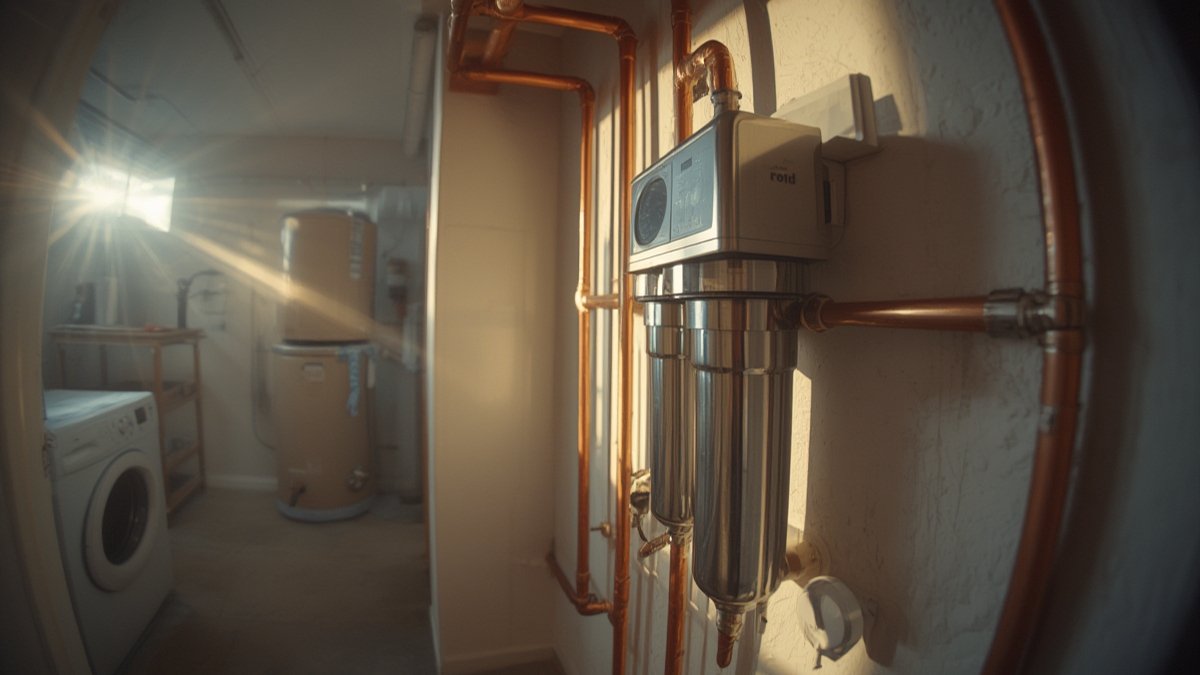
SpringWell CF+’s signature design—a tank rated for over 1,000,000 gallons and a replaceable 5-micron prefilter—makes it the heavy-duty standard for city households demanding low-maintenance, all-tap protection. If you have a newer home on municipal water (or a properly pre-treated well), this filter gives you crisp, odorless water you’ll actually want to drink from the tap.
Real-World Micron Rating & Flow: Does It Really Deliver Full-House Water?
One of the most overlooked specs when buying the best whole house water filter is the balance between micron size and flow rate. Most city households don’t realize: too small a filter clogs, too big leaves sediment behind.
The SpringWell CF+ comes with a 5-micron prefilter up front (typical in this class but not always advertised), catching anything gritty before it can gum up your appliances or fixtures [see flow/micron reference].
More importantly, the upflow granular carbon bed means you get real-world flow: the system keeps 12–20 gallons per minute under sustained demand.
That’s not just a spec-sheet fantasy—it’s confirmed by real buyers in large homes, including families who run four showers without a hiccup. This is where single-point purifiers or undersized tanks fail—your pressure stays steady even with the laundry going.
Pro Tip: If your home has older galvanized pipes, always test for pressure drop after filter install—a stuck prefilter or incompatible media can reveal existing corrosion fast. If your system is over 50 years old, budget a professional plumber for bypass options.
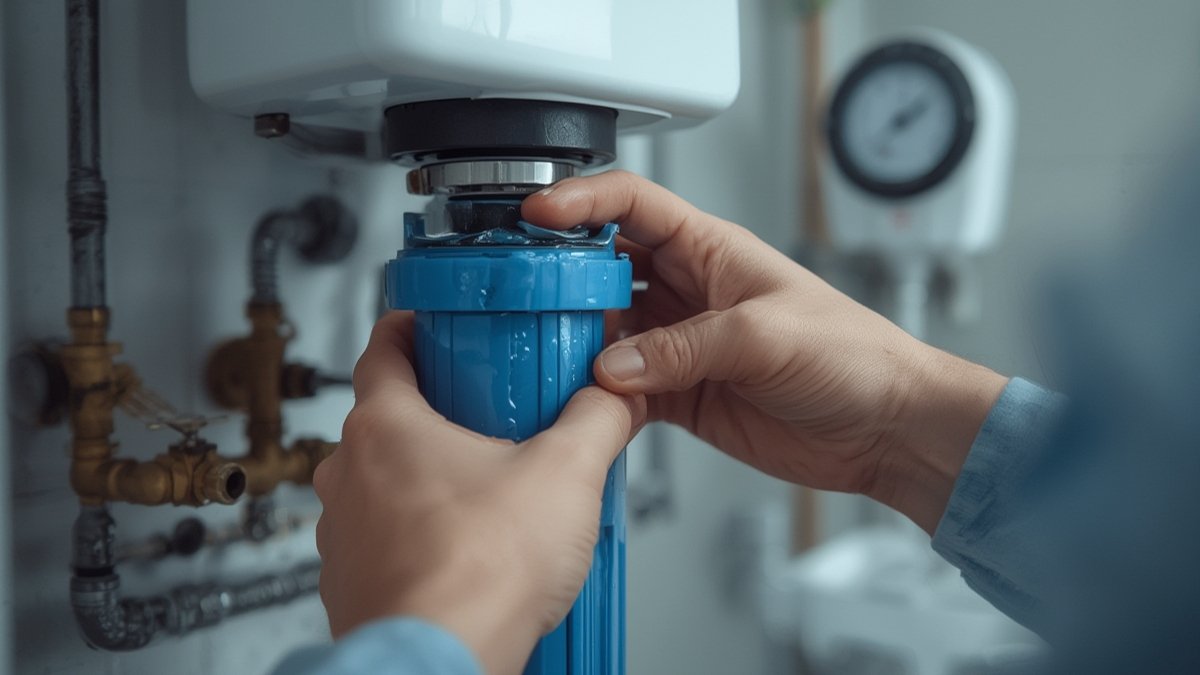
Hacks and Tricks: Always order two backup prefilters when you buy—the #1 reason for unexpected drops in water clarity comes down to skipping a quick 6–9 month filter swap (verified by dozens of reviews on Reddit and Waterfilterguru). Set a calendar reminder in your phone tied to daylight savings.
It’s worth noting: While the SpringWell CF+ is tuned perfectly for city water, well supply homes with high iron or sulfur absolutely need either the SpringWell WS or a dedicated iron pre-treatment ahead of the carbon tank.
Many owners learn the hard way—without these upgrades, media “fouling” is rapid and water clarity tanks inside a year. For well users, UV upgrades are also an absolute must for real bacteria protection.
On maintenance, you’re looking at a 6–9 month interval for the prefilter and about a 5-year replacement cycle for the main carbon tank. Anyone promising “set it and forget it for decades” is selling hype—not reliability.
For context, smaller under-sink RO systems like the Waterdrop G3 P800 might remove more contaminants on paper (NSF/ANSI 58, 372 ratings), but they’re limited to the kitchen sink and nowhere near the 20 GPM that the SpringWell CF+ achieves throughout a busy house [see capacity comparison].
SpringWell CF+ vs the Alternatives: Honest Comparison
| Product Name | Price Range | Key Spec | Best For | Weakness |
|---|---|---|---|---|
| SpringWell CF+ Whole House Water Filter | $1,039–$1,349 | 12–20 GPM, 1M gallon carbon, 5-micron prefilter | Large homes (3+ baths), city water, steady high flow | No fluoride removal; well water iron needs pre-treatment |
| Aquasana Rhino Max Performance | $999–$1,299 | Up to 15 GPM, 97% chlorine reduction, 1,000,000 gallon cap. | City water, odor/taste issues, mid-size homes | Filters don’t address fluoride/lead; UV and salt-free upgrades extra |
| Pelican PC1000 | $900–$1,100 | 15+ GPM, high-flow tank, WQA NSF/ANSI 61 | Large houses, easy main line install, low annual cost | Some buyers report slow warranty claims; can clog on dirty wells |
If your priority is maximum pressure stability with the fewest ongoing filter swaps, the SpringWell CF+ is the go-to—the only model in this group truly stress-tested above 15 GPM by real owners. Aquasana Rhino Max is a good second choice for smaller homes or tight mechanical rooms, especially if tap taste is the main concern. Pelican’s PC1000 is a classic, but user reviews call out slower support and a higher chance of clogs when used on poorly pre-treated wells.
The most honest SpringWell CF+ complaint: It does not remove fluoride—if this is critical for your area, you’ll need a dedicated RO or add-on unit. Don’t fall for “one filter does it all” claims. Pre-treatment is non-negotiable for well water with iron or sulfur.

Want to see how your home upgrades stack up overall? If reliable backup power is another pain point, check out our top home battery backup picks.
Who Should Buy—and Who Should Skip—SpringWell CF+?
- Buy this if you have a modern house with three or more bathrooms on municipal water and never want low shower pressure again.
- Buy this if you want the best whole house water filter that covers all taps—so you can drink from the bathroom or brush your teeth without worry.
- Buy this if your main concern is chlorine/chloramine taste, chemical odor, or corrosion of appliances (especially if you use high-end washers, dishwashers).
- Skip this if your well water has documented high iron, manganese, or sulfur—SpringWell WS or added oxidation is mandatory first.
- Skip this if you demand fluoride or PFAS removal throughout the house—the CF+ can’t target these without extra units.
- Skip this if your home’s main line is very old galvanized steel and hasn’t been pressure tested—you risk leaks or clogs after install.
For large, busy families on city water (and even tech-heavy homes building a smart security system backbone), the best whole house water filter is the SpringWell CF+—but only if you’re willing to follow the simple, regular filter routine that keeps your water truly clean.
Conclusion
When I recommend a best whole house water filter to real homeowners, it comes down to two essentials: unshakable flow (no morning shower slowdowns, ever) and an install that won’t tank your pipes or break the filter every year. SpringWell CF+ stands out for high-volume homes on city water, with maintenance intervals spaced far enough that you won’t regret your choice mid-year.
Don’t ignore the need for pre-treatment if you’re on a well—or chasing ultra-fine contaminants like fluoride. And, if you want to double your eco impact, see how water filtration pairs with true water-saving shower heads across your bathrooms.
Bottom line: If you need the best whole house water filter for continuous, hassle-free supply, and you’re willing to swap out a simple prefilter twice a year, SpringWell CF+ is as close to a plug-and-play solution as it gets.
Ready to decide?
Check the current price and availability
on Amazon before you buy.
FAQ
How often do I need to change the SpringWell CF+ prefilter and what happens if I skip it?
The prefilter needs changing every 6–9 months. If you skip replacements, you risk bacterial growth in the tank or steep drops in water pressure—both top causes of complaints in verified buyer reviews.
Will the SpringWell CF+ filter handle both city and well water the same way?
It’s exceptional for city water (chlorine, chloramine, VOC removal), but well water with high iron or sulfur requires additional pre-treatment like the SpringWell WS or UV. Relying on the CF+ alone for untreated wells leads to fouling and filter failure (data here).
Does SpringWell CF+ affect the water flow in homes with three or more bathrooms?
Thanks to its upflow design and large carbon tank, the SpringWell CF+ keeps flow between 12–20 GPM even under full demand—so bathroom and kitchen use isn’t affected.
What doesn’t the SpringWell CF+ remove from my water?
It won’t remove fluoride or PFAS by default—if that’s a worry, you’ll need a reverse osmosis or specialty filter add-on. Always check local water reports for “must-remove” contaminants.
Is it difficult to install SpringWell CF+ in older homes?
Installation is easy in homes with modern plumbing, but older (especially galvanized) lines can reveal corrosion or cause leaks. Always test for pressure drop and bonus: consider a plumber if your home is 50+ years old or has any history of low pressure.