 VettedHomeGear.com
Best Whole House Surge Protector: 2026 Definitive Best Guide

Best whole house surge protector is more than just a search query — it’s a lifesaver for anyone who’s ever felt sick to their stomach after a fried fridge, scorched smart TV, or total home blackout from a power spike.
If you live in a storm-prone area or have loaded your panel with sensitive gear (think: battery backup systems, solar inverters, smart home hubs), you can’t afford to trust generic advice.
This is not another vague roundup — you’ll get the most overlooked installation warnings, the real-life performance gaps, and the honest weak spots for top-rated panel-mounted models. Keep reading to discover how to really protect your entire home’s electronics — even if your wiring or panel setup is less than ideal.
Most guides barely skim the surface; here, you’ll finally see the missing details that can make or break your results with the Schneider Electric Square D HEPD80, Eaton CHSPT2ULTRA, and Intermatic Smart Guard. Real owner pain points and lab-tested specs, not just spec sheets.
Stop risking your $20,000 worth of electronics — find out what the best whole house surge protector actually does, where it slips up, and whether it’s the investment your home genuinely needs.
Key Takeaways
- Manufacturer surge current ratings for leaders like Schneider HEPD80 and Eaton CHSPT2ULTRA range from 36kA to 108kA per phase — but no third-party lab-verified averages or real-world clamping voltages are published. [source]
- Top guides routinely ignore crowded panel issues and the actual panel space requirements for installation. Many buyers don’t discover these until the electrician says it won’t fit.
- The biggest homeowner complaint for the Schneider Electric Square D HEPD80 wasn’t failure — it was the cumbersome warranty claim process, with few actual hardware failure reports in 2026.
- What Is Schneider Electric Square D HEPD80 and Who Is It Really For?
- Installation Pitfalls Most Homeowners Miss — and How to Avoid Them
- Schneider Electric HEPD80 vs Eaton and Intermatic: Honest Comparison
- Who Should Buy — and Who Should Not
- Conclusion
- FAQ: Best Whole House Surge Protector
What Is Schneider Electric Square D HEPD80 and Who Is It Really For?
The Schneider Electric Square D HEPD80 is a Type 1 whole house surge protector, purpose-built to clamp dangerous voltage spikes and prevent them from frying every appliance and smart device in your home. It mounts directly at your main electrical panel on the line (or load) side, stopping surges at the door before they cascade to every circuit.
If you’re a homeowner with a substantial investment in electronics, HVAC, solar, or backup battery systems — especially in areas prone to lightning or grid volatility — the HEPD80 is a front-line defense. It’s especially suitable if your service panel supports indoor or outdoor installations and you want proven surge ratings bolstered by a recognized warranty from Schneider/American Electric.
The defining spec: up to an 80kA per phase maximum surge current, with a NEMA 4X enclosure that lets you install outdoors, outpacing many legacy models. It’s designed for main panels but perfectly fits subpanel configurations if you have multiple split loads (critical with home battery backup or solar systems, covered here).
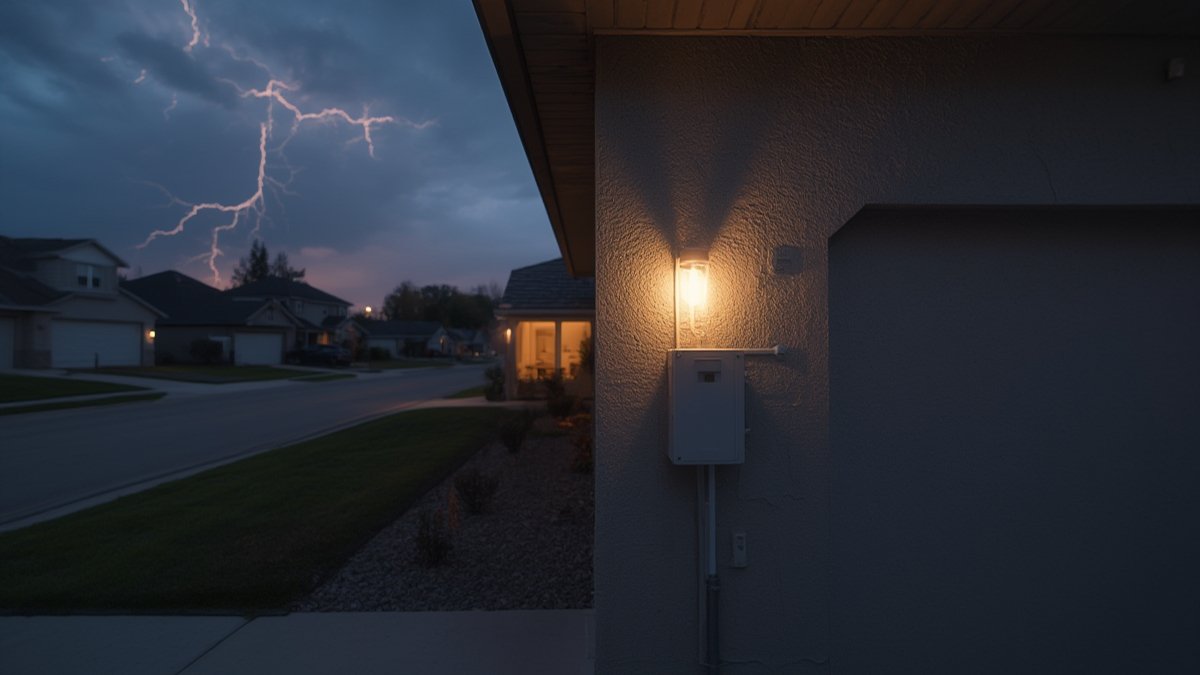
You’ll want this unit if: you rely on critical electronics, want a single solution protecting every outlet and wired device, or can’t risk your power backup, smart home, or entertainment center to a $10 plug-in strip.
Installation Pitfalls Most Homeowners Miss — and How to Avoid Them
One error repeated in “best whole house surge protector” reviews is glossing over the nitty-gritty of installation, especially with panel-mounted models. The reality is this: if you have a crowded or older main panel, it’s not a guaranteed fit.
Popular guides mention “easy install” and “works on most panels,” but in reality, models like the HEPD80 and Eaton CHSPT2ULTRA need open knockout ports, adequate heat dissipation space, and proper main breaker compatibility. You can’t safely install any surge protector in a jam-packed or overheated panel — your electrician may refuse, or worse, squeeze it in, risking failure.
Most pro installers recommend wiring surge protectors with the shortest possible leads and torquing connections per the manufacturer’s chart (not just “hand-tight”). A loose or too-long lead reduces clamping speed, massively cutting protection. If you’ve just added home backup or solar — such as solar generators or new battery systems — check space before you buy any surge protection device.
Pro Tip: Always have your electrician check for open full-size breaker slots or available knockouts before ordering the HEPD80. Never plan around a tandem (dual) breaker for surge protection devices — they require full-pole spacing for heat and safe operation.
Hacks and Tricks: If your panel is full and you still want whole-house coverage, consider installing an auxiliary subpanel with dedicated surge protection, especially when adding battery backup or solar retrofits. You’ll protect both your new and legacy circuits with room to upgrade.

What most “top articles” miss: NEMA enclosure ratings really matter. The HEPD80’s NEMA 4X rating allows indoor or outdoor installs — helpful if your garage/utility room is maxed out, or if you want coverage as close to the meter as allowed. [source]
Finally, always verify UL 1449 listing and Type 1 labeling for installation at the main panel’s line side, as some Type 2 devices still claim “whole home” but only attach downstream.
Schneider Electric HEPD80 vs Eaton and Intermatic: Honest Comparison
| Product Name | Price Range | Key Spec | Best For | Weakness |
|---|---|---|---|---|
| Schneider Electric Square D HEPD80 | $90-$130 | 80kA surge current, 6 protection modes, NEMA 4X | Indoor/outdoor main panel install; warranty coverage; most new and retrofit homes | Warranty claims can be slow/cumbersome; panel space may be tight |
| Eaton CHSPT2ULTRA | $100-$170 | 108kA surge current, diagnostic LEDs, UL-listed | High-risk surge areas; easy LED health check; indoor preference | NEMA 4 rating — mostly indoor use only; may need larger panel space for clean fit |
| Intermatic Smart Guard IG2240-IMSK | $165-$220 | 63kA per phase, replaceable modules, Type 1/2 use, power switch, 6 protection modes | Retrofits; multi-panel homes; those who want long-term maintenance options | Higher price; indoor/NEMA 1 only on some models; replaceable modules add complexity |
Choose the Square D HEPD80 if you prioritize proven main panel protection, moderate surge events, and the ability to mount outdoors for maximum flexibility. If you live in lightning alley or want higher surge current plus real-time health monitoring, the Eaton CHSPT2ULTRA’s 108kA claim and LED indicators are a big draw.
For homes with multiple subpanels or needing easier service, Intermatic’s Smart Guard makes sense, but comes at a premium and requires planning for module swaps.
The Square D HEPD80’s only recurring complaint: warranty claims can require significant documentation and sometimes a lengthy replacement process, even though direct product failures are rare. [source]

Who Should Buy — and Who Should Not
- Buy this if you have $5,000+ in electronics, solar panels, or a whole home battery backup that would devastate your budget if hit by a surge.
- Buy if you’re adding a smart home ecosystem, especially with always-on platforms like smart hubs or integrated security systems.
- Buy if your main panel has enough space for a dedicated surge module, or you can install outdoors if needed.
- Skip if your service panel is fully loaded with no clear breaker slot — install could be impossible without upgrades.
- Skip if you live in a low-risk area (no major storms, voltage swings, or grid instability) and only care about single-appliance surge protection.
- Skip if you expect plug-and-play features like internet monitoring or remote app controls — none of these are standard on HEPD80-level devices.
If you demand the best whole house surge protector for comprehensive protection and long-term reliability, the Square D HEPD80 is built to deliver—just make sure your panel can actually accommodate it, and don’t expect smart notifications out of the box.
Conclusion
The choice of the best whole house surge protector is about stacking the odds in your favor — not hoping luck will save your essential electrics.
Products like Schneider Electric Square D HEPD80 stand above basic plug-in solutions, but installation realities and warranty quirks make or break the experience. Homeowners juggling smart tech, solar, or backup systems can finally get peace of mind if they plan for breaker and enclosure limitations in advance.
While no model is perfect, understanding NEMA ratings, verifying panel space, and checking real user critiques on warranty processing will help you avoid the few real pain points buyers have flagged.
If your goal is to keep your costly home battery backup or smart home investment safe in 2026 and beyond, choosing the best whole house surge protector from this shortlist is a smart — and now fully informed — investment.
Ready to decide?
Check the current price and availability
on Amazon before you buy.
FAQ: Best Whole House Surge Protector
What is the surge current rating of Square D HEPD80, and does it matter?
The HEPD80 is rated for up to 80,000 amps (80kA) surge current per phase according to the manufacturer — higher than many entry-level models. No third-party lab-verified averages are published for 2026 models, so always check for UL 1449 listing and NEMA 4X enclosure for safety. [source]
Can I install a whole house surge protector myself to save money?
Most manufacturers and home insurance providers require licensed electrician installation at the main panel, especially for Type 1 models. Incorrect installation could void the warranty or leave your home unprotected, so never risk DIY unless you’re qualified.
What is the biggest installation mistake with whole house surge protectors like the HEPD80?
The most common mistake is underestimating the space needed inside a crowded panel — electricians frequently turn down installs due to lack of breaker slots, or homeowners find out too late that heat dissipation is compromised. Always confirm space before purchasing.
Why do most top articles skip over real clamping voltage and response time data?
No independent lab data for clamping voltage or response time on 2026 models is available — only manufacturer specs are published. This is why results can differ from product sheet promises, and why it’s critical to read trusted reviews and user feedback.
Is the HEPD80 covered if my devices still get damaged during a surge?
Warranty claim experiences vary. The biggest complaint is that Schneider’s process requires detailed documentation and proof of correct installation — and some users have faced lengthy delays.
Don’t expect instant replacements, but the coverage is there if you follow all steps precisely.