 VettedHomeGear.com

Jackery Explorer 1000 Plus Review 2026: A Powerhouse Worth Every Penny?

Jackery Explorer 1000 Plus review: Is this the best modular solar generator for camping, home backup, and mobile energy needs? This realistic, research-driven review strips away the hype and shows exactly what the Jackery Explorer 1000 Plus can and cannot do—so you avoid expensive mistakes.
Key Takeaways
- Jackery Explorer 1000 Plus is a modular, LiFePO4-based solar generator with high-rated output and expansion up to 5kWh, outperforming most legacy models for cycle life and recharge speed.
- Real-world reviews praise the 1000 Plus for AC/solar charging, multi-appliance running, and reliable portability—but highlight its weight and lack of weather resistance.
- If you need scalable backup or fast off-grid power, it’s a reliable all-in-one, provided you avoid rain and cold charging. Watch out for accessory and expansion costs vs. larger-capacity models.
- What Makes the Jackery Explorer 1000 Plus Different?
- How to Get the Most Out of the Jackery Explorer 1000 Plus
- Advanced Analysis & Common Pitfalls
- Conclusion
- FAQ
What Makes the Jackery Explorer 1000 Plus Different?
The Jackery Explorer 1000 Plus is a next-generation solar generator and portable power station designed for users needing reliable backup, fast recharging, and future-ready battery expansion. Unlike many older portable generators, the 1000 Plus uses lithium iron phosphate (LiFePO4) batteries, supporting up to 4000 cycles—roughly 4X more than traditional lithium-ion units.
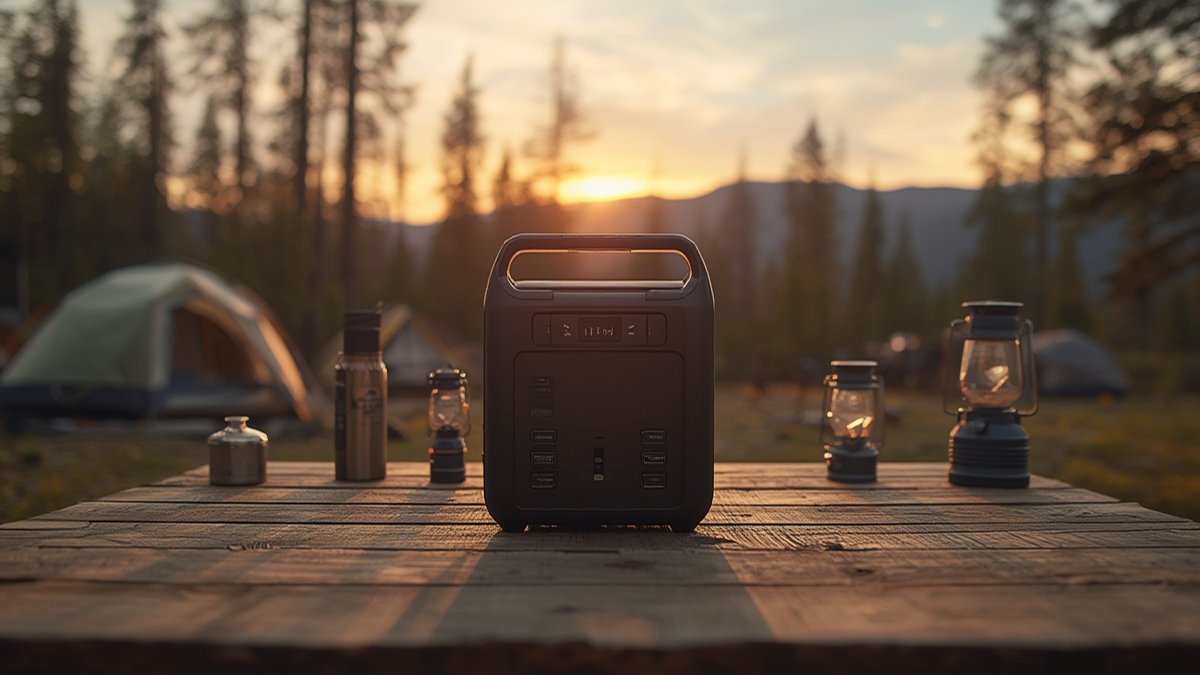
It provides a 2000W rated (4000W surge) pure sine inverter, so you can run nearly any household device—including fridges, microwaves, and power tools—directly from the unit. This is a major leap over the original Jackery Explorer 1000, which was limited to a 1000W output and offered much lower cycle life.
Other game-changers include modular expansion (add extra 1264Wh batteries up to 5kWh total), high-speed AC and solar charging (1.7 hours from wall, 2 hours with full solar), and USB-A, USB-C, and car outputs to cover modern small devices.
The Jackery Explorer 1000 Plus fills the gap between expensive whole-home systems and smaller portable units, making it appealing for anyone who wants reliable backup without going all-in on a massive, wall-mounted power bank. For a full overview of backup options, see our guide to home battery backup systems.
How to Get the Most Out of the Jackery Explorer 1000 Plus
If you’re considering the Jackery Explorer 1000 Plus (or you’ve just purchased one), here’s how to maximize value and avoid common mistakes.
💡 Pro Tip: For maximum battery lifespan, avoid storing or charging the Jackery Explorer 1000 Plus below 32°F (0°C) or leaving it in a vehicle on hot summer days. LiFePO4 chemistry is robust—just use common sense.
🔥 Hacks & Tricks: Pair the Explorer 1000 Plus with SolarSaga panels (as long as you stay within the 60V/10.5A per port input spec) for budget-friendly, ultra-fast solar charging—great for overlanding and vanlife.
- Understand Your True Power Needs
Make a list of devices you’ll run together. The Jackery Explorer 1000 Plus can safely handle up to 2000W (4000W surge), so it can run a home fridge, CPAP, laptop, and LED lights simultaneously. For heavier “appliance starter” loads (microwave, hair dryer), stagger your usage to avoid inverter overload. - Charge Multiple Ways for Maximum Flexibility
– Wall (AC): 1.7 hours for a full charge.
– Car: ~7 hours.
– Solar: 2 hours with 6x200W panels in full sun, or ~9 hours on 2x100W panels (slow).
Fast charging is a key edge of the 1000 Plus—older models often take 5+ hours. - Plan for Expansion (If Needed)
The beauty of the 1000 Plus is modular growth. Add up to 3 extra battery packs (each 1264Wh) for up to 5kWh total. Useful for longer RV trips or home outage backup. See more ideas for maximizing off-grid power in our comprehensive best solar generators guide. - Don’t Ignore the Weight and Weather Limitations
At 22 to 32 pounds, this unit is portable for car camping/vanlife but too heavy for backpacking. It lacks an IP rating—do not use it in rain, snow, or dusty/sandy environments. Charging below 32°F is not recommended and may harm longevity. - Monitor Usage and Recharge Appropriately
The unit tracks input/output watts and percent remaining. For longer cycle life, never deep-discharge fully unless necessary. If home backup is your top priority, check out our portable power station recommendations for other expandable options. - Budget for Accessories and Expansion
Factor in the cost of recommended SolarSaga panels and optional extra batteries for true cost of ownership. Most buyers underestimate these extras. For high-watt solar, consider third-party MC4-compatible options—just ensure voltage and amperage compatibility.
- Always store the Jackery Explorer 1000 Plus in a dry, ventilated area. Dust, moisture, or extended cold can harm LiFePO4 units—running indoors or inside a vehicle is safest.
- Use the app (if available) for updates or remote monitoring if your usage scenario benefits from it.
By following these steps, you can confidently use the 1000 Plus for everything from home blackout protection to multi-day camping with electronics—without getting caught off guard when the weather changes or high-watt appliances are needed.
Advanced Analysis & Common Pitfalls
Despite its robust design, the Jackery Explorer 1000 Plus is not perfect for every user. Here’s what our research—and real-world reports—reveal.
| Feature | Jackery 1000 Plus | Original Explorer 1000 | Explorer 1000 v2 | Bluetti AC180 |
|---|---|---|---|---|
| Capacity | 1264Wh [source] | 1002Wh | 1070Wh | 1152Wh |
| Output | 2000W (4000W surge) | 1000W (2000W surge) | 1500W | 1800W |
| Battery Type | LiFePO4, 4000 cycles | Li-NMC, 1000 cycles | LiFePO4, 4000 cycles | LiFePO4 (assumed) |
| Solar Input | 800W max | Lower (not detailed) | Lower (e.g., 2x100W) | Not detailed |
| Expandability | Up to +3 batteries (5kWh) | None | Not stated | Not stated |
| Weight | 22-32 lbs | 22 lbs | ~22 lbs | ~35 lbs |
Common Pitfalls and Real-World Issues
- Portability Trade-Offs: At up to 32 lbs (sources vary), the Jackery 1000 Plus is much heavier than legacy 1000Wh units. It’s manageable for car camping, RVs, or as a wheeled home backup, but definitely not for backpacking or long carries. [specs]
- No IP/Weatherproof Rating: The unit is not splash-proof or dust-proof—a big risk if you plan to use it outdoors in variable climates or overnight. Exposure to rain or even heavy dew can damage it (details).
- Cold-Weather Charging Limitation: Charging below freezing (32°F/0°C) is not supported—this is typical of LiFePO4 cells but not everyone expects it. The device may refuse to charge in winter or alpine conditions.
- Noisy? Official testing reports 30dB or less, which is extremely quiet. In reality, users haven’t reported annoying fan noise under load, but you’ll notice fan cycling if running heavy appliances for hours.
- Accessory Pricing: The true cost of system ownership rises quickly once you add SolarSaga solar panels and expansion batteries. EC buyers are often surprised, especially when comparing total usable watt-hours to the EcoFlow Delta Pro or Delta 2 line. For cost-effective alternatives, see our full solar generator comparison.
- User Support: No major complaints reported on Jackery support. However, like many brands, response times may slow during demand surges or peak seasons. Extended warranties aren’t covered in most reviews—expect “standard” backup via long battery cycle life (4k cycles).

Who Should (and Shouldn’t) Buy This?
- If you need expandable backup power for a home office or food preservation, the Jackery Explorer 1000 Plus is reliable, simple to use, and fast-charging.
- Perfect for overlanding, camping, or boating where vehicle carry is possible and solar charging is required.
- Not recommended for ultralight hikers or those who need weatherproof, unattended outdoor power in extreme climates.
- If your needs are mostly indoors or “bug-in” during outages, check if the slightly heavier but higher-capacity battery backup competitors (like EcoFlow Delta or Bluetti) better match your cost, size, and expansion requirements.
Conclusion
The Jackery Explorer 1000 Plus stands out for modular battery expansion, fast recharge by AC or solar, and a super-long LiFePO4 lifespan. Its only significant drawbacks are weight and lack of weatherproofing.
For home backup, RV life, or serious camping with modern electronics and appliances, it’s a well-rounded, forward-proof solution—provided you budget for expansion accessories and keep it dry from the elements.
Ready to power your next adventure or secure your family against outages? Check latest pricing and compare with competitors covered in our solar generator roundup. If you want a battery backup for your house or home office, don’t miss our full guide to home battery backup systems. For the best expandable choices, read up on the EcoFlow Delta Pro as a direct alternative in our Delta Pro review.
Bottom line: If your priorities are expandability, fast off-grid recharge, and future-ready battery chemistry, the Jackery Explorer 1000 Plus review proves this model is one of the most versatile solar generators in its class.
FAQ
How many extra batteries can you add to the Jackery Explorer 1000 Plus?
You can connect up to 3 additional 1264Wh expansion batteries for a total capacity of 5056Wh (just over 5kWh). Each pack adds more runtime and increases solar input support.
What can the Jackery Explorer 1000 Plus realistically run?
It can safely run a full-size refrigerator for 15 to 20 hours, a CPAP machine for multiple nights, laptops, phones, lights, mini-coolers, projectors, and even short bursts on microwaves or power tools (as long as you stay under 2000W constant load and 4000W surge).
Is the Jackery 1000 Plus suitable for rainy or cold outdoor conditions?
No. It lacks any waterproof (IP) rating. You should keep it dry and avoid charging or storing below 32°F (0°C) to protect battery life.
Can you use third-party solar panels with the Jackery 1000 Plus?
Yes. As long as you stay within the 16V–60V (10.5A per port) max solar input specification, third-party MC4-compatible panels will work. This is a great way to save on accessory costs.
How does the Jackery 1000 Plus differ from the EcoFlow Delta 2?
The Jackery 1000 Plus offers faster expansion and higher surge output, while the EcoFlow Delta 2 line may charge faster AC-only and have more outlets, but with less total expandability. Both use LiFePO4 batteries for long cycle life.