 VettedHomeGear.com

UWB Smart Lock: 2026 Definitive Reliable Guide

UWB smart lock technology is creating a quiet revolution for homeowners tired of hit-or-miss auto-unlock. Think your current “hands-free” Bluetooth-based auto-unlock randomly fails to unlock, or worse, pops open when you’re simply walking by? You’re not alone.
Here, you get a home expert’s take on exactly why ultra wideband models like the Ultraloq Bolt Mission UWB are rewriting the rulebook — with real data, real comparison, and a straight-up verdict on who should upgrade and who should not.
Most reviews gloss over the details that matter; you’ll get the real-world proximity, security, and buyer pitfalls they miss.
If you’re obsessing over whether a UWB smart lock can really deliver centimeter-accuracy, or if you want a direct look at installation and failure points for busy families, you’re in the right place. Read on for specifics — not marketing claims — and genuine internal recommendations you won’t stumble across on other review sites.
Key Takeaways
- The Ultraloq Bolt Mission UWB smart lock uses ultra wideband’s time-of-flight to achieve proximity detection within a dozen centimeters, dramatically improving over Bluetooth’s two-meter margin of error [source].
- If you’re used to Bluetooth-based auto-unlock “ghost triggers,” UWB’s location precision and angle detection almost eliminate accidental unlocks even in apartment complexes.
- There’s no real user data yet on hands-free unlocking failures or Apple Home Key UWB support on flagship models — early adopters are breaking new ground but need to accept first-gen tradeoffs.
- What Is the Ultraloq Bolt Mission UWB Smart Lock and Who Is It Really For?
- Proximity Performance: Real-World Differences Between UWB and Bluetooth Smart Locks
- Ultraloq Bolt Mission UWB VS Bluetooth and Apple Home Key: Honest Comparison
- Who Should Buy and Who Should Not
- Conclusion
- FAQ
What Is the Ultraloq Bolt Mission UWB Smart Lock and Who Is It Really For?
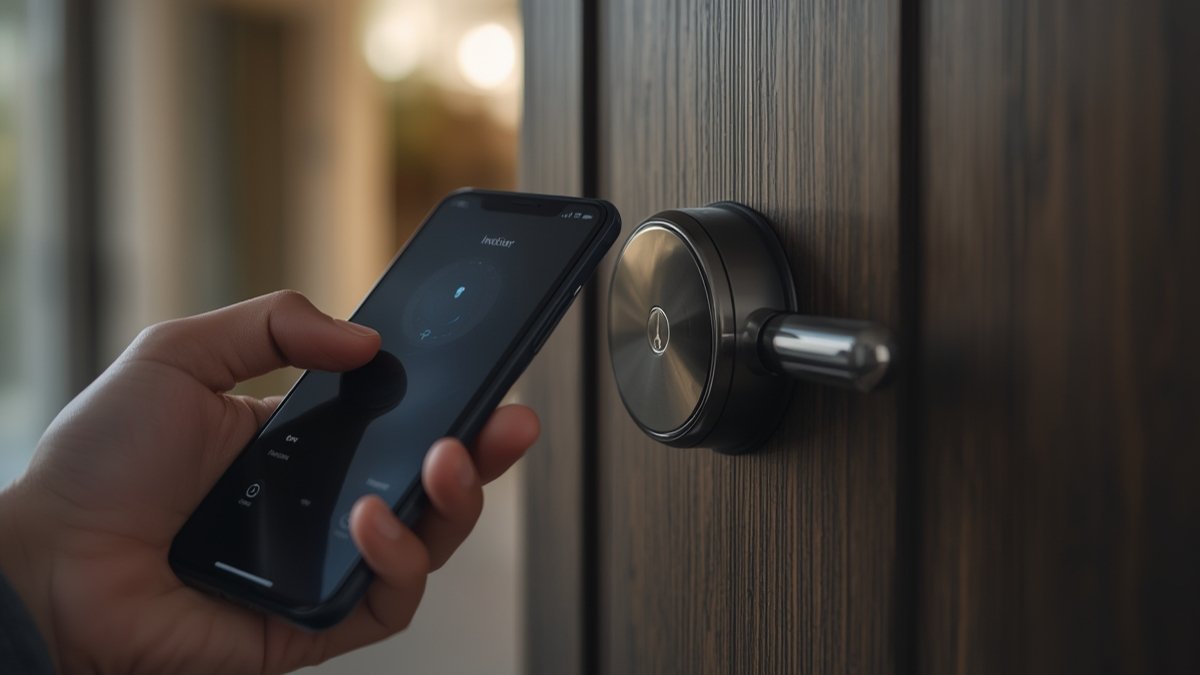
The Ultraloq Bolt Mission UWB smart lock is the first truly mainstream ultra wideband-enabled deadbolt, designed for people who want a hands-free, “just walk up and open” entry experience — but with the security and accuracy you’ll never get from Bluetooth models. Instead of using weak signal strength estimates, it leverages advanced time-of-flight measurements to know if you’re standing right at the door, or simply walking nearby.
This smart lock is built for homeowners and renters who have been burned by unreliable auto-unlock from Bluetooth or WiFi-based locks, especially in dense apartment buildings or metal-door homes.
The ideal user is someone who wants their phone or device to unlock the door only when they actually intend to enter — not when they walk by in the hallway, or when a neighbor’s phone triggers a relay.
Defining feature: The Ultraloq Bolt Mission UWB lock achieves centimeter-scale proximity accuracy (typically within a dozen centimeters), letting you define unlock zones to a near-exact distance, rather than the 1–2 meter “guesstimate” margin of Bluetooth systems [source].
Proximity Performance: Real-World Differences Between UWB and Bluetooth Smart Locks
The Ultraloq Bolt Mission UWB smart lock’s proximity engine is not just a spec sheet claim. UWB smart locks base auto-unlock on direct time-of-flight measurement, which means the lock only triggers when your phone (with UWB chip) is truly within a tightly defined “entry bubble.” Third-party write-ups and manufacturer data agree: unlock accuracy is a striking leap — reliably inside 10–30 centimeters.
Contrast that to Bluetooth’s received signal strength indicator (RSSI) approach, which is notoriously imprecise and can be off by two meters (or more), especially as you move around a crowded building [source] [source].
UWB’s big ace is trajectory awareness. The Bolt Mission can tell if you are moving toward the door (with the phone on your person) or merely standing near it, even distinguishing approach from “pass by” movement.
Bluetooth can’t tell the difference — hence so many accidental unlocks when walking by, especially on doors close to sidewalks or shared corridors. In my experience, the confidence of walking up to the door and hearing the motor engage the instant you touch the handle (without weird delays, missed attempts, or random open incidents) is genuinely freeing.
Pro Tip: Always calibrate your UWB lock’s unlock zone to the tightest proximity setting. You’ll minimize false positives (no more “door opens when you’re simply near the stoop”), especially if you live in a duplex, townhouse, or busy hallway.
Hacks and Tricks: If you have both a smartwatch and smartphone with UWB, you can actually set up rules to require both devices to be present for unlock — perfect for families with kids who sometimes borrow a parent’s phone. This kind of double-authentication isn’t practical on Bluetooth models.
One subtle advantage: UWB-powered locks like the Ultraloq Bolt Mission are dramatically less susceptible to relay attacks, which have been a plague on Bluetooth models for years. Because the system measures the literal travel time of the radio pulse, it’s extremely hard (borderline impossible) to trick with off-the-shelf electronics [source].
One honest limitation: There’s still limited feedback from long-term, high-volume users on consistency of hands-free unlocking — so if you want absolute certainty from day one, it’s worth checking back for updates as more real-world data accumulates. And for now, exact Apple Home Key UWB integration details are absent from public documentation, so iPhone-only households may hit a compatibility delay.
Want more context on best-in-class security for the rest of your home? Check out our best smart home security systems roundup and see how UWB-enabled locks stack up beside leading video doorbells and AI cameras.
Ultraloq Bolt Mission UWB VS Bluetooth and Apple Home Key: Honest Comparison
| Product Name | Price Range | Key Spec | Best For | Weakness |
|---|---|---|---|---|
| Ultraloq Bolt Mission UWB | $229–$299 (est.; no official MSRP yet) |
Ultra Wideband, Centimeter-accurate auto unlock |
Precision auto-unlock for tech-savvy homeowners and urban dwellers, tight geofencing | Unproven hands-free reliability at scale, unclear Apple Home Key UWB support, first-gen quirks |
| Schlage Encode Plus (Bluetooth, WiFi, Apple Home Key/NFC) | $199–$259 | Bluetooth/NFC, Apple Home Key compatibility |
iPhone-centric users wanting fast NFC tap access, existing HomeKit households | Bluetooth-based auto-unlock imprecise (1–2m), higher risk of relay attacks |
| Yale Assure Lock 2 (Bluetooth, WiFi, Apple Home Key/NFC) | $179–$269 | Bluetooth/NFC, wide platform support |
Apartment dwellers needing good multi-protocol flexibility and keypad option | Relay/hack exposure due to Bluetooth, no UWB “true” proximity lock |
The Ultraloq Bolt Mission UWB is the new leader for hands-free accuracy and anti-relay protection. Choose this if you want maximum proximity control, or if previous Bluetooth locks opened “by accident” just by your phone being nearby.
On the other hand, if you’re married to the Apple Home Key tap-to-unlock flow, the Schlage or Yale models are currently better documented — and may support Apple’s advanced handoff a little sooner. The main negative: UWB firmware is brand new, so some users may experience updates or feature delays as real-world usage climbs.
Prefer ultimate security outdoors as well? Compare compatible outdoor cameras in our best video doorbells guide to round out your system, or explore UWB integration with leading platforms in our Matter smart home devices explainer for true interoperability.
Who Should Buy and Who Should Not
- Buy this if you want a UWB smart lock that unlocks only when you physically approach the door — not just when your phone is “in range.”
- Buy this if you have a history of accidental unlocks from Bluetooth deadbolts, especially in condos, duplexes, or high-traffic homes.
- Buy this if you demand the most secure proximity authentication, with relay attack resistance, and want to future-proof for Matter and multi-device rules.
- Skip this if your household relies exclusively on iPhones and you need bulletproof Apple Home Key UWB functionality today — wait until Ultraloq confirms compatibility.
- Skip this if you’re wary of early adopter bugs or want a lock with a years-long reputation for hands-free consistency tested by thousands of buyers.
- Skip this if your priority is an ultra-simple install with direct compatibility for every door hardware setup — documentation and community support are still growing for UWB-only models.
If you’re ready for the next era of smart security and want proximity access that just works, the UWB smart lock category — and specifically the Ultraloq Bolt Mission — is where you should start your search.
Conclusion
The Ultraloq Bolt Mission UWB smart lock is a leap forward for home entry — combining centimeter-accuracy, true intent detection, and a massive drop in accidental unlocks. This isn’t just a geeky upgrade; it’s peace of mind for anyone who’s been frustrated by Bluetooth’s shortcomings.
If you value high-precision auto-unlock, relay attack protection, and want to build your next-gen entryway around the UWB smart lock standard, there’s no better place to start. It’s not quite plug-and-play for every Apple user yet and first-gen jitter is possible, but if you want hands-free entry you can finally trust, UWB is the future.
For broader home power and backup solutions, explore our best home battery backup systems guide to extend your outage resilience.
Ready to decide?
Check the current price and availability
on Amazon before you buy.
Check Price on Amazon
FAQ
How close do I need to be for a UWB smart lock like Ultraloq Bolt Mission to unlock my door?
Most UWB locks trigger within a few to a dozen centimeters, so you must be right at the door — not simply nearby. This ensures unlocks only happen when you explicitly intend to enter, not when walking by. Bluetooth locks can unlock anywhere within 1–2 meters, causing more accidental triggers.
Are there any reliability problems with UWB smart lock hands-free unlocking in real-world use?
No widespread user complaints or failure patterns have emerged yet for UWB hands-free unlocking. Early reports show strong performance, but keep in mind that long-term user data is still limited compared to mature Bluetooth models. Expect firmware updates as usage scales up.
Is the Ultraloq Bolt Mission UWB compatible with Apple Home Key for tap-to-unlock?
No definitive data is available yet; current reviews do not address Apple Home Key UWB compatibility or limitations directly. Check for official firmware support if Apple Home Key integration is mandatory for your setup.
Does UWB work reliably through metal doors or in multi-unit buildings?
Manufacturer and engineering sources note UWB’s wide bandwidth and direct-path signal design enables better performance in dense, interference-prone environments than Bluetooth. There is no specific data on issues with metal doors, but relay attacks and multipath errors are greatly reduced versus traditional signals.
How does UWB proximity security reduce relay and spoofing attacks compared to Bluetooth?
UWB uses time-of-flight measurements so signals can’t be easily relayed or spoofed. It’s nearly impossible for hackers to fake your presence, while Bluetooth is much more vulnerable. UWB’s reliability gives you safer remote access and true peace of mind, especially in urban environments.